
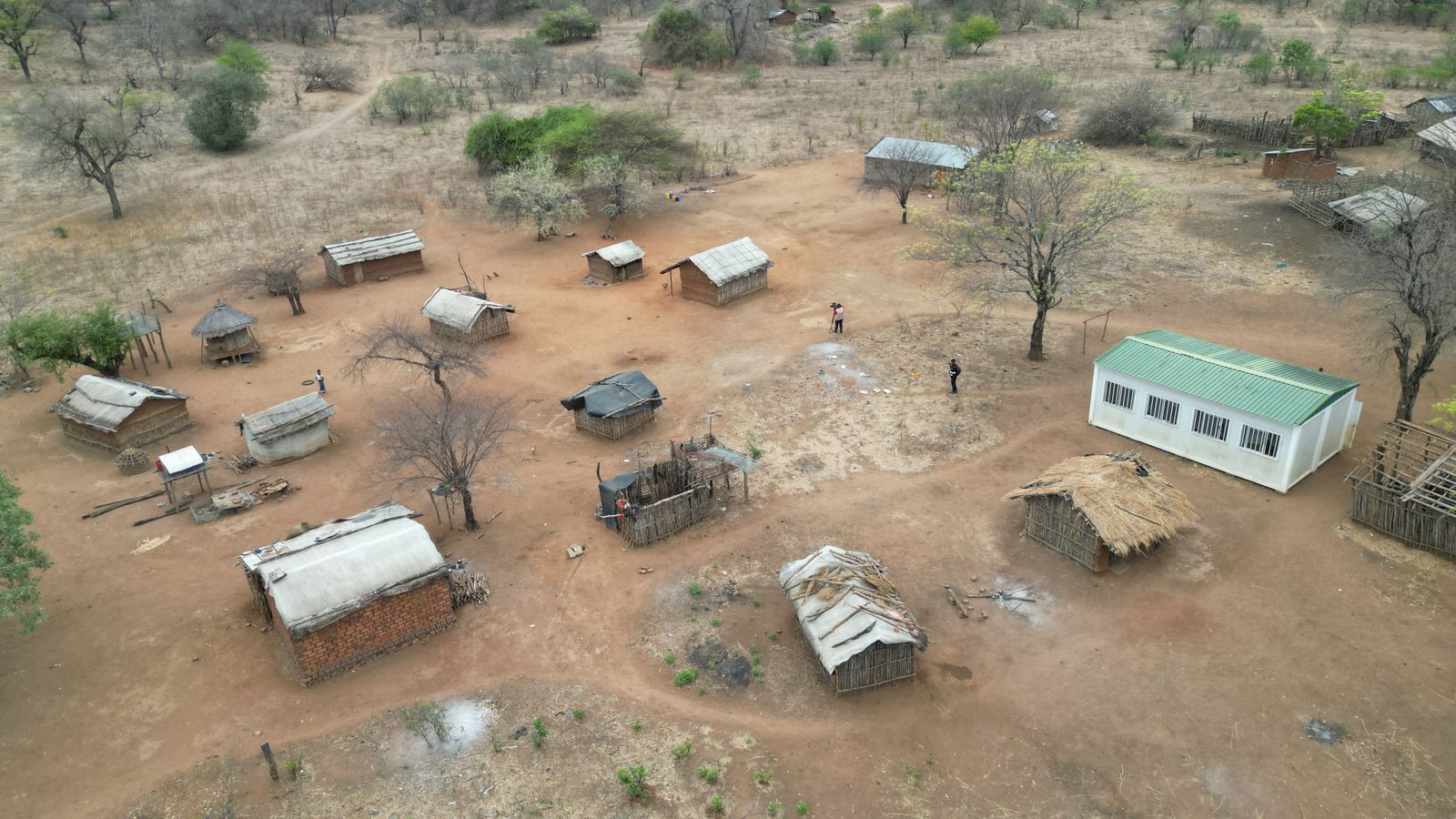
Photo: sinalmultimedia / Pexels
A Summary of Adaptation Commitments and Priorities Relevant to Malawi's NAP
Malawi's Third Nationally Determined Contribution (NDC 3.0), submitted in June 2026, sets out an enhanced and sector-specific adaptation agenda for the period 2025 to 2040. Read alongside the National Climate Change Management Policy, the NDC 3.0 provides the political mandate and the strategic direction for adaptation action, while the National Adaptation Plan (NAP) process is the vehicle through which this direction is translated into medium and long-term, costed, and implementable programmes. This summary highlights the adaptation commitments most relevant to the NAP process and demonstrates how the three instruments, policy, NDC, and NAP, reinforce one another to strengthen climate-resilient development in Malawi.
Adaptation Commitments and Priorities Most Relevant to the NAP
The NDC 3.0 adopts a dual mitigation and adaptation focus, and for the first time presents adaptation priorities across twelve thematic sectors rather than a single national statement. This sectoral granularity mirrors the structure the NAP process itself requires, and gives the NAP a ready-made set of targets to sequence, cost, and operationalise.
Twelve priority sectors and thirty-five prioritised measures
Malawi has prioritised thirty-five adaptation measures across agriculture, livestock and fisheries, energy, transport, water resources, blue economy, infrastructure and housing, human well-being and health, biodiversity and ecosystems, climate services, urban resilience, nature-based solutions, and loss and damage. Each measure carries an indicator, a target year, a responsible agency, and a conditionality status (unconditional or conditional), providing the NAP with a validated starting inventory of actions rather than a process that must begin from first principles.
A vision anchored in national frameworks
The NDC 3.0 adaptation vision, to build a climate-resilient nation where people, ecosystems, and infrastructure can anticipate, absorb, and recover from climate shocks while sustaining inclusive growth, is explicitly aligned with the National Resilience Strategy, the Malawi 2063 vision, and the NAP itself. This shared vision means the NAP does not need to reconcile competing national narratives on adaptation; it inherits one that has already been agreed across government.
Financing figures the NAP can plan against
The NDC 3.0 estimates adaptation financing needs of USD 2.84 billion over 2025 to 2035, of which USD 1.09 billion is unconditional and USD 1.75 billion is conditional on international support. These figures are broken down by sector, for example USD 650 million for energy, USD 502 million for water resources, and USD 405 million for climate services, giving the NAP Investment Plan concrete, government-endorsed benchmarks to build bankable project pipelines around.
Structural vulnerabilities the NAP must continue to address
The NDC 3.0 restates the structural vulnerabilities that make adaptation planning urgent: widespread poverty, with about seventy percent of the population living below USD 2.15 per day; near-total dependence on rain-fed agriculture; annual forest loss of approximately 2.8 percent; and limited fiscal space, with public debt at roughly sixty-six percent of GDP in 2024. These vulnerabilities, first identified through the NAP's own climate risk and vulnerability assessments, confirm that the NAP's risk analysis remains the evidentiary foundation on which the NDC's adaptation ambition is built.
The NAP as the Instrument that Operationalises the NDC and Policy
The NDC 3.0 and the National Climate Change Management Policy set direction, ambition, and headline targets. Neither instrument, by design, sequences activities, assigns detailed budgets across years, or builds the technical evidence base needed for implementation at district and community level. This is the role the NAP process is intended to fill.
- From targets to delivery pathways. The NDC 3.0 sets thirty-five sector measures with target years and indicators, but implementation requires sequencing decisions, technical design, procurement, and monitoring systems that only a NAP-led planning process can provide. The NAP translates the NDC's stated ambition, for example one hundred percent flood risk mapping by 2035 or a unified drought early warning system, into staged work plans with clear implementation steps.
- From policy principles to sectoral integration. The National Climate Change Management Policy establishes the mandate for mainstreaming climate risk into national and sectoral planning. The NAP operationalises this mandate directly, since its core function is to embed adaptation into sector plans such as the National Agriculture Policy, the National Irrigation Master Plan, the Transport Master Plan, and the National Water Resources Master Plan, all of which are cited as reference frameworks in the NDC 3.0 adaptation table.
- From national ambition to local adaptation plans. The NDC 3.0 explicitly identifies decentralised climate action through Local Adaptation Plans (LAPAs) as a governance priority. The NAP process is the mechanism through which this decentralisation is designed and rolled out, ensuring that national-level commitments reach the twenty-eight District Councils responsible for on-the-ground delivery.
A Long-Term Framework for Cross-Sectoral Implementation
Where the NDC 3.0 reports in five-year increments to the UNFCCC (2030, 2035, and an indicative 2040 trajectory), the NAP process is designed to operate on a rolling, iterative basis that extends implementation planning well beyond any single NDC cycle. This distinction is a strength rather than a gap: the NAP gives Malawi continuity of adaptation action across NDC updates, election cycles, and shifts in international finance availability.
- It maintains and periodically updates the evidence base, the Climate Risk and Vulnerability Assessments, that both the NDC 3.0 and the Policy rely on for their adaptation prioritisation.
- It carries forward measures that are unconditional and already underway (for example agro-meteorological service strengthening) alongside those that remain conditional on finance mobilisation (for example the four river-basin IWRM and climate risk plans), so that progress is not lost between NDC cycles.
- It provides the multi-year Investment Plan structure into which the NDC 3.0's sector-by-sector financing needs, such as the USD 502 million required for water resources adaptation, can be developed into bankable projects for the Green Climate Fund, the Global Environment Facility, and bilateral partners.
- It anchors the twelve-sector, thirty-five-measure adaptation table into national development planning instruments, including Malawi 2063 and its First Ten-Year Implementation Plan, ensuring adaptation is treated as core development rather than a stand-alone climate exercise.
Contribution to Malawi's Adaptation Commitments Under the Paris Agreement
Malawi's adaptation commitments under the Paris Agreement are communicated internationally through the NDC, but they are delivered domestically through the NAP. This relationship is central to the credibility of Malawi's reporting under the Enhanced Transparency Framework.
- Evidence for the Global Stocktake. The NAP's monitoring, evaluation, and learning systems generate the adaptation progress data that feeds into Malawi's Biennial Transparency Reports and, in turn, into the Global Stocktake process referenced throughout the NDC 3.0. Without a functioning NAP monitoring system, the NDC's adaptation ambition cannot be evidenced at the international level.
- Demonstrating the conditional-unconditional distinction. The NDC 3.0 draws a clear line between adaptation actions Malawi can deliver domestically and those requiring international support. The NAP Investment Plan is the tool used to substantiate this distinction to donors and climate funds, converting the NDC's high-level financing table into project-level justification.
- Fulfilling reporting obligations under Article 7. The Paris Agreement requires Parties to engage in adaptation planning processes and to submit information periodically. Malawi's NAP submission and its ongoing updates are the primary means of meeting this obligation, working in tandem with the NDC's adaptation communication.
Coherence Between Policy, NDC, and NAP: Why Alignment Matters
The NDC 3.0 was developed through the same participatory architecture that governs the Policy and the NAP: the Environmental Affairs Department under the Ministry of Natural Resources leads all three, validated through the National Steering Committee on Climate Change and the National Technical Committee on Climate Change and Disaster Risk Management. This shared institutional home is itself a coherence safeguard, but three specific alignment mechanisms deserve emphasis for the NAP process.
A common evidence base
The NDC 3.0's adaptation priorities and the NAP's sectoral vulnerability assessments draw on the same underlying data, including the Fourth National Communication, the First Biennial Transparency Report, and DCCMS climate projections under CMIP6 pathways. Keeping the NAP's technical updates synchronised with the NDC's five-year revision cycle will prevent the two instruments from drifting toward inconsistent risk assessments or competing sector targets.
A common governance structure to reinforce, not duplicate
The NDC 3.0 identifies the enactment of the Climate Change Management Bill and stronger inter-ministerial coordination as conditions for successful implementation. These are also NAP institutional strengthening priorities. Coordinated advocacy for the Bill, and joint use of the Expert Working Groups on Climate Change, will avoid parallel coordination structures competing for the same limited technical capacity.
A shared Monitoring, Reporting and Verification (MRV) system
The NDC 3.0 calls for an integrated national MRV and transparency system, tracking both mitigation and adaptation progress using IPCC guidelines and feeding into the Biennial Transparency Reports. The NAP's own monitoring and evaluation framework should be designed as a component of this same system rather than a separate one, so that adaptation indicators are reported once, consistently, and are usable by both processes.
Practical recommendation
As the NAP process advances, alignment will be strengthened by cross-referencing the NDC 3.0's thirty-five prioritised adaptation measures directly into the NAP's programme of work, adopting the NDC's sector financing estimates as the starting point for the NAP Investment Plan, and ensuring that any future NAP revisions and NDC updates are sequenced so that evidence flows in both directions rather than being produced twice.
Summary: How the Three Instruments Relate
| Instrument | Primary Function | Time Horizon |
|---|---|---|
| National Climate Change Management Policy | Sets the legal and institutional mandate for climate action and mainstreaming | Standing policy, periodically reviewed |
| NDC 3.0 | Communicates national ambition and headline sectoral targets to the UNFCCC | 2025 to 2040, five-year update cycle |
| NAP | Operationalises the Policy's mandate and the NDC's targets into costed, sequenced, sector and district-level action | Rolling, iterative, medium to long term |
Conclusion
Malawi's NDC 3.0 and the National Climate Change Management Policy give the NAP process both a mandate and a validated set of priorities to work from. The NAP, in turn, is what makes the NDC's adaptation ambition deliverable and what allows Malawi to report credibly on its Paris Agreement commitments. Sustaining close coordination between the three, through shared evidence, shared governance structures, and a shared MRV system, will be central to converting Malawi's enhanced adaptation ambition into resilience outcomes for communities, ecosystems, and the economy.